Bar Grating
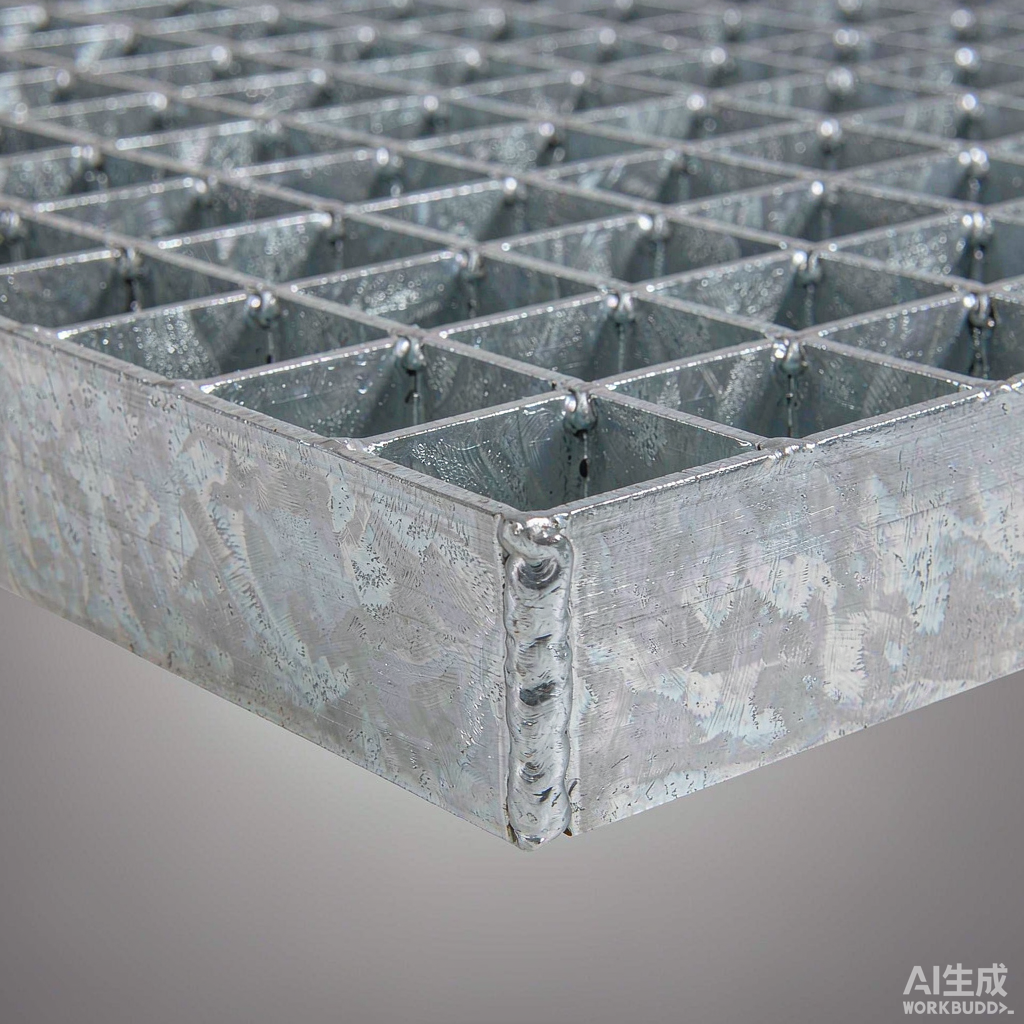
Welded, press-locked and riveted bar grating in carbon steel, 304/316L stainless and aluminum 6061-T6 — any bearing bar spacing from 11/16″ to 2″, cut to drawing with load tables per NAAMM MBG 531.
Get a Quote Download CatalogUS-style bar grating designations & metric equivalents
Screenshot-ready. Every dimension below is a standard tooling size — custom spacings are cut to your drawing at no extra mold cost.
| US mark | Bearing pitch | Cross pitch | Metric type | Typical bar heights |
|---|---|---|---|---|
| 19W4 | 19/16″ (≈30 mm) | 4″ (100 mm) | G_/30/100 | 1″, 1¼″, 1½″, 2″ (25/32/38/50 mm) |
| 15W4 | 15/16″ (≈24 mm) | 4″ (100 mm) | G_/24/100 | 1″, 1¼″, 1½″ (25/32/38 mm) |
| 15W2 | 15/16″ (≈24 mm) | 2″ (50 mm) | G_/24/50 | 1¼″, 1½″ (32/38 mm) |
| 11W4 | 11/16″ (≈18 mm) | 4″ (100 mm) | G_/18/100 | 1″, 1¼″ (25/32 mm) |
| 13W4 | 13/16″ (≈20 mm) | 4″ (100 mm) | G_/20/100 | 1″–2″ (25–50 mm) |
| 2″ × 2″ | 50 mm | 50 mm | G_/50/50 | Heavy duty 50–65 mm |
Naming rule: [bearing bar pitch in 16ths of an inch] + W (welded) / P (press-locked) + [cross bar pitch]. Metric type: bar height × thickness / bearing pitch / cross pitch. Example — 19W4 with 1¼″ × 3/16″ bars = G32×3/30/100.
Choose your construction and material
Each family has its own load table, finish options and lead time.
Welded Bar Grating
Resistance-welded bearing + twisted square cross bars. Best load-per-kg; the industry default.
View series → Product FamilyStainless Bar Grating
304/316L welded or press-locked — food, pharma, marine.
View series → Product FamilyAluminum Bar Grating
6061-T6 swage-locked — 1/3 the weight of steel.
View series → Product FamilySerrated Bar Grating
Serrated-bearing-bar variant for wet & oily floors.
View series →Four material systems, one factory
Zinc thickness is measured per ASTM A123 (70–85 µm), salt-spray tested to 1,000 h. Stainless is pickled and passivated; FRP resin is matched to your chemical media.
| Material | Specification | Best For | QC Note |
|---|---|---|---|
| Carbon Steel, Hot-Dip Galvanized | Q235B / A36, zinc 70–85 µm per ASTM A123 | Walkways, platforms, trench covers, stair treads — the default choice | 1,000 h neutral salt-spray test before white rust |
| Stainless Steel 304 / 316L | AISI 304 (indoor / general chemical), 316L (marine / chloride) | Food processing, pharma, offshore, chemical plants | Passivated and pickled finish, 316L for >3% chloride media |
| Aluminum 6061-T6 | Mill or anodized finish, riveted or press-locked construction | Weight-critical platforms, water treatment, architectural meshes | ≈ 1/3 the weight of steel at comparable spans — cannot be hot-dip galvanized |
| FRP / Fiberglass (GRP) | Molded (isophthalic / vinyl ester) or pultruded profiles | Electrolytic areas, sewage plants, coastal platforms | Non-conductive, non-sparking, corrosion-free alternative to metal |
Load & self-weight — welded carbon steel, 19W4 (30/100)
Values calculated to NAAMM MBG 531 with deflection limited to L/200. Need a stamped calculation sheet for your span? Ask in the quote form.
| Bar (h×t, mm) | Self-weight (kg/m²) | U-load @1m (kN/m²) | C-load @1m (kN) | Max clear span @ 4.8 kN/m² |
|---|---|---|---|---|
| 25×3 | 22.4 | 6.6 | 3.1 | 0.90 m |
| 32×3 | 26.5 | 11.0 | 5.1 | 1.15 m |
| 32×5 | 42.8 | 18.3 | 8.5 | 1.30 m |
| 38×3 | 31.0 | 15.6 | 7.2 | 1.30 m |
| 40×5 | 39.6 | 28.7 | 13.3 | 1.50 m |
| 50×5 | 34.8 | 44.9 | 20.8 | 1.90 m |
Self-weight is the number fabricators forget in lifting plans — the lightest section that passes L/200 usually saves 15–25% of total steel weight.
Where bar grating works hardest
Reference projects available per industry on request.
Catwalks & conveyor access
19W4, 32×3 bar — foot traffic with light maintenance loads.
Equipment platforms
50×5 / 65×5 with 50/50 pitch for wheeled loads up to forklift class.
Bar grating trench covers
Banded panels on angle-iron frames, heel-proof 30 mm pitch options.
Stair treads & landings
Pre-fabricated treads with carrier plates — see stair treads page.
Architectural screens
Aluminum press-locked with tight 11/16″ pitch for visual privacy.
Machine guarding
Custom-shaped panels notched around equipment, bolt-in retrofit.
Send a drawing, receive a finished panel
Upload DXF or DWG with your RFQ — we return a dimensioned shop drawing for approval within 24 hours. No approval, no production.
In-house fabrication
- Cut-to-size from DXF / DWG drawings — band saw and plasma, ±2 mm tolerance
- Notching and cutouts for pipes, cable trays and manholes in any shape
- Banding (closed ends) in flat bar or checkered plate, toe plates to EN ISO 14122-3
- Curved and radial panels for tanks, towers and architectural projects
- Stair tread fabrication with welded or bolted carriers, nosing options
- Pre-assembly of clips, anchors and support steel into kit form for site speed
Everything is auditable
Third-party inspection (SGS/BV/TÜV) welcome at any stage. MTC per EN 10204 3.1 ships with every order by default.
✓
ASTM A36 — carbon structural steel bar and plate
✓
ASTM A123 — hot-dip galvanizing, 70–85 µm zinc coating on bearing bars
✓
ASTM A1011 / Q235B — flat bar feedstock with mill certificates
✓
NAAMM MBG 531 — load & deflection tables (uniform + concentrated load, L/200)
✓
EN 1090-1/-2 — structural steel execution, CE-marked assemblies
✓
ISO 9001:2015 — quality management system, audited annually
✓
MTC (EN 10204 3.1) material test certificate with every shipment
Ordering terms at a glance
1 pallet (approx. 20 m²) for stock sizes; custom sizes from 100 m²
15–25 days after drawing confirmation
20GP ≈ 26–28 t · 40HQ ≈ 26 t (varies with panel size)
FOB Shanghai / Ningbo · CIF & DDP available on request
T/T 30% deposit, L/C at sight for orders over USD 50,000
Bar grating is the US trade term for the parallel-bearing-bar open mesh floor used on every industrial platform built since the 1950s. This page maps every common US designation — 19W4, 15W4, 11W4 — to the metric tooling we actually run, so your spec, our quote and the delivered panel all agree.
If you already know the US mark, scroll to the conversion table; if you only know the span and load, send both to the quote form and our engineers will return the lightest passing section.
Bar grating sizing: the naming rule that answers 90% of questions
A mark like 19W4 reads: bearing bars spaced 19/16″ apart (≈30 mm — close enough to walk on in work boots), W = welded construction, cross bars every 4″ (100 mm). The other half of the spec — bearing bar height × thickness — is chosen from load. 1″ × 3/16″ (25×3) covers pedestrian walkways; 1½″ × 3/16″ (38×3) is the most common industrial walkway; 2″ × 1/4″ (50×5) and up carry wheeled and point loads.
Metric type G
- 19W4 (30/100) — the default for walkways and platforms.
- 15W4 (24/100) — smoother underfoot, more bars per m² (+15–20% weight).
- 11W4 (18/100) — dense mesh for small tools and heel protection; also the ADA-adjacent option.
- 50/50 heavy duty — forklift and heavy plant traffic.
Welded vs press-locked vs riveted
Welded is strongest per kilogram and cheapest — 80% of the market. Press-locked has perfectly flat bars and looks better architecturally, but the locked joint loses some torsional strength at high load. Riveted is the historic option for retrofit work. The full comparison — load, cost, lead time, removability — is in our welded grating guide.
From RFQ to container
Send panel sizes, US mark or metric type, quantity and destination port. You get a quote with: unit price FOB, per-panel load check to NAAMM MBG 531, total weight and container plan (20GP ≈ 26–28 t, 40HQ ≈ 26 t but twice the volume), and production lead time of 15–25 days. Stainless and aluminum bar grating use the same RFQ path.
Frequently asked questions
What size is 19W4 bar grating?
What is the difference between 19W4 and 15W4?
How much does bar grating weigh?
Can you supply 100% stainless 316L bar grating with certification?
What is the maximum panel length?
Do you band the edges?
How do you fix bar grating down?
Get a quote within 24 hours
Include panel size, load requirement and quantity — or just upload your drawing. Our engineers respond with a price and a load check.
Attach your file, then send the form — your email client will open with the details pre-filled. For files over 10 MB, email sales@promptbarn.com directly.
✓ Your email client has opened with the RFQ details. Didn't open? Write to sales@promptbarn.com.