Trench Drain Grating
Trench and channel drain covers in galvanized steel, stainless and FRP — EN 1433 load classes A15 through F900, with frame, locking and heel-proof mesh options for municipal, industrial and parking applications.
Get a Quote Download CatalogEN 1433 load classes we fabricate
Screenshot-ready. Every dimension below is a standard tooling size — custom spacings are cut to your drawing at no extra mold cost.
| Class | Test load (kN) | Typical application | Bearing bar (mm) | Weight (kg/m²) |
|---|---|---|---|---|
| A15 | 15 | Pedestrian, cycle paths, gardens | 25×3 | 22 |
| B125 | 125 | Sidewalks, light vehicles | 32×3 / 32×5 | 28–43 |
| C250 | 250 | Parking lots, driveways | 40×5 | 41 |
| D400 | 400 | Roads, loading yards | 50×5 | 48 |
| E600 | 600 | Docks, heavy industry | 50×8 / 65×6 | 78 |
| F900 | 900 | Airport aprons, extreme duty | 65×8 | 112 |
Classes per EN 1433:2007. We supply matching angle-iron or ductile frames with either bolt-down or spring-latch anti-rattle fixing.
Choose your construction and material
Each family has its own load table, finish options and lead time.
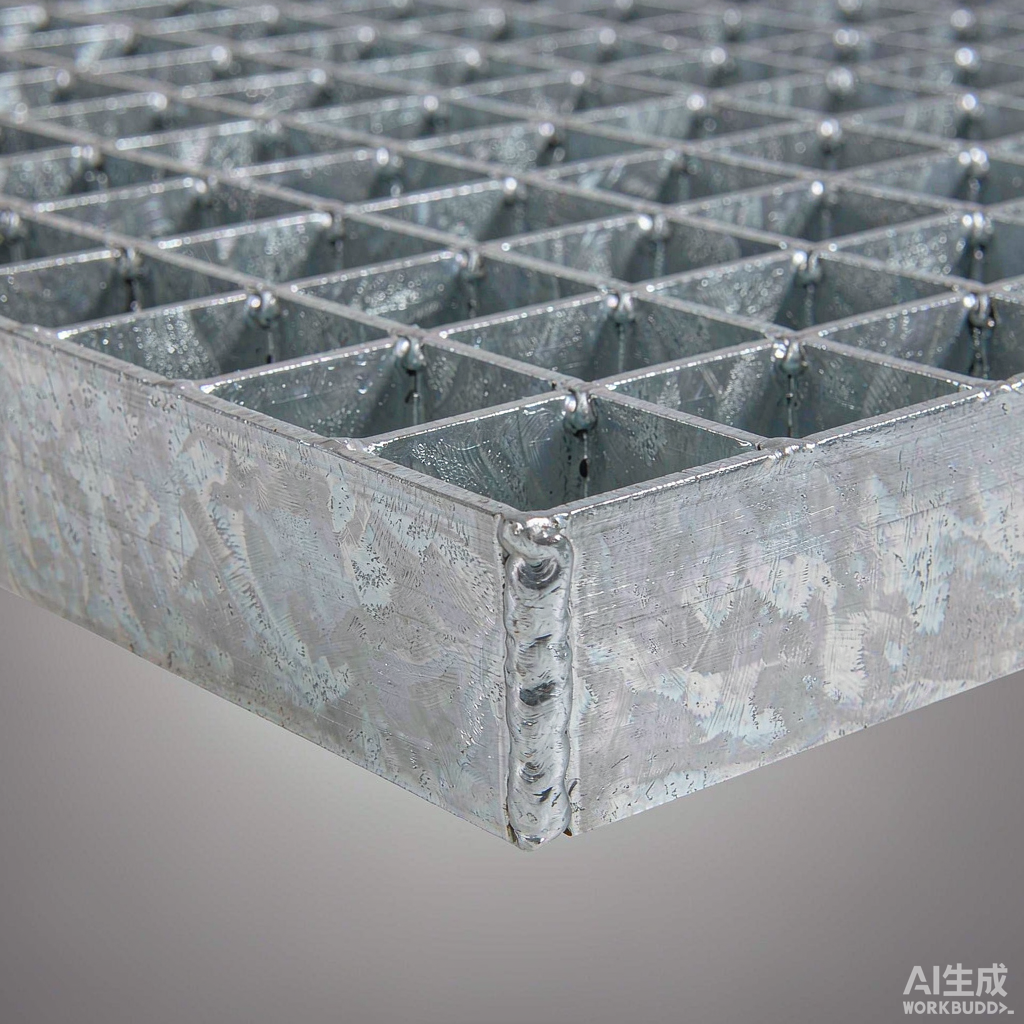
Galvanized Steel Covers
The default for utilities, parking and industrial trenches — 70–85 µm zinc.
View series → Product FamilyStainless Covers
316L for food plants, pools and coastal promenades.
View series → Product FamilyFRP Covers
Non-conductive, corrosion-free — sewage and chemical trenches.
View series → Product FamilyHeel-Proof Mesh
≤30 mm pitch variants for public pedestrian zones.
View series →Four material systems, one factory
Zinc thickness is measured per ASTM A123 (70–85 µm), salt-spray tested to 1,000 h. Stainless is pickled and passivated; FRP resin is matched to your chemical media.
| Material | Specification | Best For | QC Note |
|---|---|---|---|
| Carbon Steel, Hot-Dip Galvanized | Q235B / A36, zinc 70–85 µm per ASTM A123 | Walkways, platforms, trench covers, stair treads — the default choice | 1,000 h neutral salt-spray test before white rust |
| Stainless Steel 304 / 316L | AISI 304 (indoor / general chemical), 316L (marine / chloride) | Food processing, pharma, offshore, chemical plants | Passivated and pickled finish, 316L for >3% chloride media |
| Aluminum 6061-T6 | Mill or anodized finish, riveted or press-locked construction | Weight-critical platforms, water treatment, architectural meshes | ≈ 1/3 the weight of steel at comparable spans — cannot be hot-dip galvanized |
| FRP / Fiberglass (GRP) | Molded (isophthalic / vinyl ester) or pultruded profiles | Electrolytic areas, sewage plants, coastal platforms | Non-conductive, non-sparking, corrosion-free alternative to metal |
Hydraulics: open area vs capture
Values calculated to NAAMM MBG 531 with deflection limited to L/200. Need a stamped calculation sheet for your span? Ask in the quote form.
| Pitch (bearing/cross, mm) | Open area | Flow capacity @ 1‰ slope (L/s/m) | Heel-proof? |
|---|---|---|---|
| 30 / 100 | ≈ 62% | 18.5 | Borderline |
| 24 / 100 | ≈ 55% | 16.2 | Yes |
| 18 / 100 | ≈ 46% | 13.4 | Yes |
| 30 / 50 | ≈ 58% | 17.1 | No |
| 11 / 100 (fine) | ≈ 33% | 9.3 | Excellent |
Manning-equation estimates for clean water. Debris-heavy runoff typically derates capture 30–50% — specify the next pitch finer when leaves or grit dominate.
Per-metre flow capacity reference
Larger projects get a full hydraulic calculation sheet with the quote — including longitudinal slope, debris derating and grate inlet efficiency.
| Channel width | Cover pitch | Slope | Capacity (L/s/m) | Suggested class |
|---|---|---|---|---|
| 100 mm | 18 / 100 | 0.5% | 13.4 | A15–B125 |
| 150 mm | 30 / 100 | 0.5% | 18.5 | B125 |
| 200 mm | 30 / 50 | 0.5% | 17.1 | C250 |
| 300 mm | 30 / 100 | 1.0% | 37.0 | C250–D400 |
| 400 mm | 40 / 100 | 1.0% | 42.5 | D400 |
| 500 mm | 50 / 100 | 1.0% | 44.8 | E600 |
Clean-water Manning estimates, 50% inlet efficiency already applied for sumped trenches.
Where trench drain grating works hardest
Reference projects available per industry on request.
Streets & sidewalks
B125/C250 covers in galvanized steel with locking frames.
Parking structures
C250–D400 with anti-rattle spring latches; oil-tight FRP option.
Plant floor trenches
E600 around forklift aisles; stainless over chemical drains.
Food plant drainage
316L slot covers with radiused edges for washdown hygiene.
Utility & substation trenches
FRP covers — non-conductive, spark-free over cable runs.
Marinas & promenades
316L or FRP with R12 slip surface for barefoot zones.
Send a drawing, receive a finished panel
Upload DXF or DWG with your RFQ — we return a dimensioned shop drawing for approval within 24 hours. No approval, no production.
In-house fabrication
- Cut-to-size from DXF / DWG drawings — band saw and plasma, ±2 mm tolerance
- Notching and cutouts for pipes, cable trays and manholes in any shape
- Banding (closed ends) in flat bar or checkered plate, toe plates to EN ISO 14122-3
- Curved and radial panels for tanks, towers and architectural projects
- Stair tread fabrication with welded or bolted carriers, nosing options
- Pre-assembly of clips, anchors and support steel into kit form for site speed
Everything is auditable
Third-party inspection (SGS/BV/TÜV) welcome at any stage. MTC per EN 10204 3.1 ships with every order by default.
✓
ASTM A36 — carbon structural steel bar and plate
✓
ASTM A123 — hot-dip galvanizing, 70–85 µm zinc coating on bearing bars
✓
ASTM A1011 / Q235B — flat bar feedstock with mill certificates
✓
NAAMM MBG 531 — load & deflection tables (uniform + concentrated load, L/200)
✓
EN 1090-1/-2 — structural steel execution, CE-marked assemblies
✓
ISO 9001:2015 — quality management system, audited annually
✓
MTC (EN 10204 3.1) material test certificate with every shipment
Ordering terms at a glance
1 pallet (approx. 20 m²) for stock sizes; custom sizes from 100 m²
15–25 days after drawing confirmation
20GP ≈ 26–28 t · 40HQ ≈ 26 t (varies with panel size)
FOB Shanghai / Ningbo · CIF & DDP available on request
T/T 30% deposit, L/C at sight for orders over USD 50,000
Trench drain grating is the cover over an open channel — and it is one of the few product families where US competition is almost nil: our keyword data shows the entire trench-drain word cluster (trench drain grating, trench drain grate, drainage grate, trench grates) sits at difficulty 0–8 with only one specialist competitor. This page exists to win it.
Three engineering numbers decide a trench cover: the <strong>load class</strong> (what rolls over it), the <strong>open area</strong> (how much water it admits), and the <strong>fixing</strong> (whether it rattles, walks or gets stolen). Everything below is organized around those three.
Choosing load class — the EN 1433 ladder
EN 1433 is the European standard for drain channel products, and it has become the shared vocabulary of US civil drawings too. The class letter fixes the survivable wheel load: A15 for pedestrian-only, B125 for sidewalks with occasional cars, C250 for parking areas, D400 for roads, E600 for docks and heavy industry, F900 for aircraft aprons.
Practical rule for industrial buyers: forklift aisles are at least C250, loading docks D400, and anywhere a loaded truck can turn, E600. Undersizing shows up as permanent sag within months — the repair costs more than the class upgrade.
Open area, debris and the pitch decision
A cover admits water in proportion to its open area, but the trench behind it clogs in proportion to what the openings let through. In leafy or gritty runoff, a 62% open 30/100 mesh silts fast; the 46%-open 18/100 keeps capturing. If your trench feeds a pump, derate the clean-water figures above by 30–50% and check the pump curve before committing to pitch.
For barefoot public zones (promenades, pools) the 30 mm bearing pitch is borderline for heels; 24 mm and finer is the heel-proof standard. Send us the trench width and slope — we return the capture check with the quote.
Frames, fixing and theft
Every cover needs a frame — angle iron in matching galvanized steel is standard; ductile or stainless frames on request. Fixing options: bolt-down (secure, serviceable), spring-latch (quick access, anti-rattle), and hinged. In public streets, unframed loose covers migrate and get stolen — the spring latch pays for itself the first month.
Custom lengths, sumps and transitions
Trenches are never one straight line: we fabricate L, T and Y junction covers, curved radiused covers around corners, sump covers with lifting eyes, and transition panels to match existing concrete or steel channels. Send the trench layout as DWG or even a marked-up site photo set — we produce a cover plan with panel numbering for your installer.
Frequently asked questions
What load class do I need for a parking lot?
Are gratings better than slotted concrete trench tops?
What keeps the cover from rattling or being stolen?
Can you match my existing trench width?
Do heel-proof covers reduce flow a lot?
Galvanized, stainless or FRP for a coastal promenade?
Do you supply the channel too?
Related products & guides
Get a quote within 24 hours
Include panel size, load requirement and quantity — or just upload your drawing. Our engineers respond with a price and a load check.
Attach your file, then send the form — your email client will open with the details pre-filled. For files over 10 MB, email sales@promptbarn.com directly.
✓ Your email client has opened with the RFQ details. Didn't open? Write to sales@promptbarn.com.